

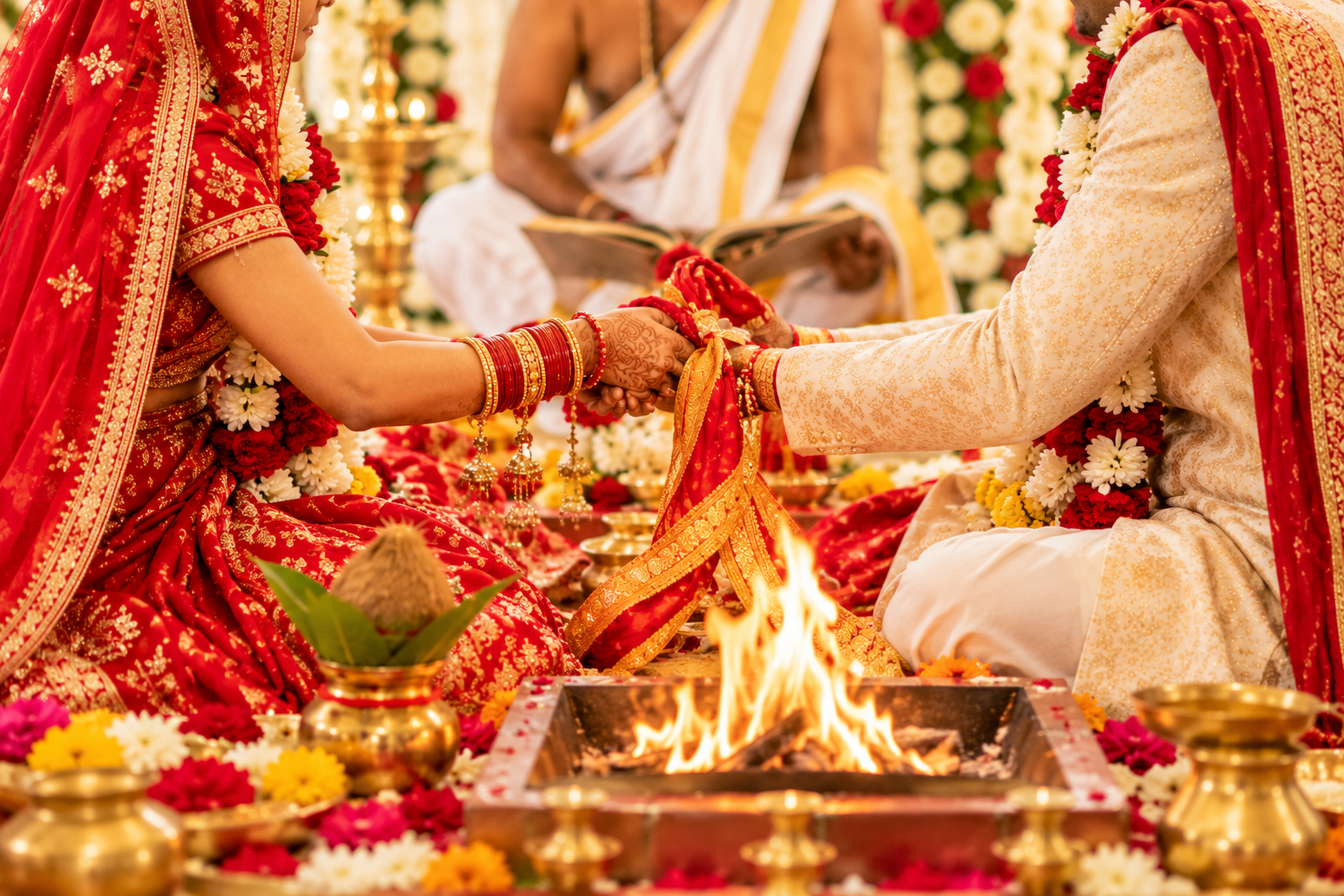
After independence, the enactment of the Hindu Marriage Act, 1955 (HMA), was a significant social reform. The HMA governs Hindus, including Buddhists, Jains, and Sikhs. The legislation has acknowledged the practical and spiritual aspects of marriage. It has enforced social reforms and accepted religious customs and rituals. The HMA provisions outline the conditions for a valid Marriage under Hindu Law in modern India.
Valid Hindu Marriage:
Solemnisation of a Hindu Marriage takes place on the performance of customary rites and ceremonies, as per Section 7. However, Section 4 ceases those customs and usages for which provision is made in this Act, it includes:
– any text rule or interpretation of Hindu law; or
– any custom or usage as part of the law before commencement of HMA; or
– any other law in force before commencement of HMA.
This conversely means the old Hindu Law continues in force to the extent not altered by the provisions of HMA. Moreover, Section 11 of the HMA has expressly mentioned that any solemnization of marriage is void if it is contrary to the clauses (i), (iv) and (v) of Section 5.
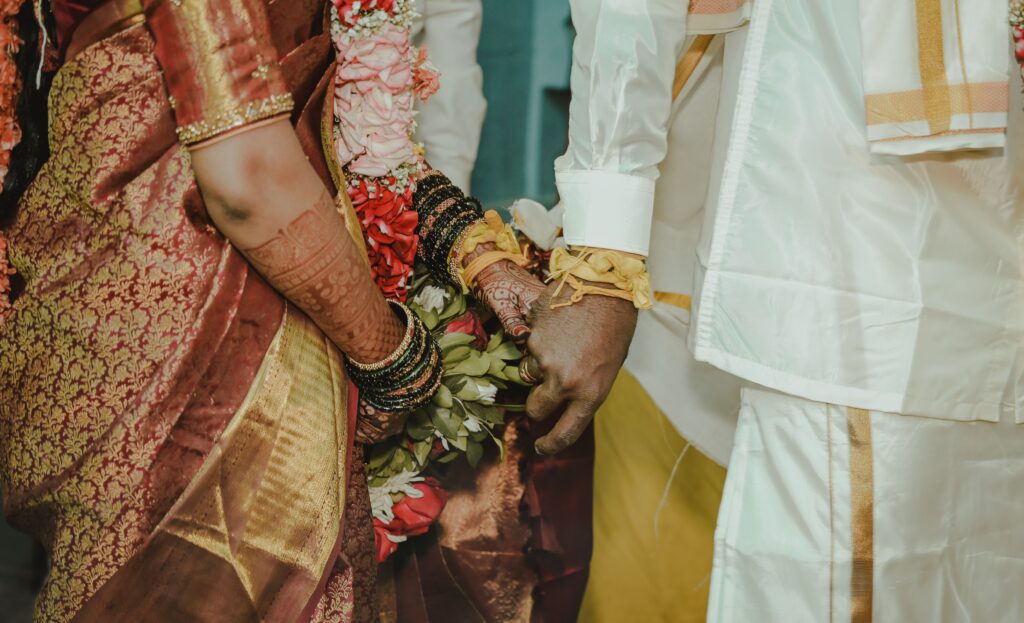
Conditions for a Valid Marriage under HMA:
The conditions for solemnisation of a valid marriage between two Hindus at the time of marriage are as follows under Section 5:
– neither person has a living spouse; (Clause (i))
– both persons capable of giving valid consent;
– neither party suffering from mental disorder to the extent of being unfit for marriage or the procreation of children;
– neither party subject to recurrent attacks of insanity;
– neither person within the degree of prohibited relationship, unless their respective custom or usage permits (Clause (iv)). Section 3(g) explains the degrees of prohibited relationship;
– neither person sapindas to each other, unless their respective custom or usage permits; (Clause (v)); Section 3(f) describes the degrees of prohibited relationship;
– bridegroom has completed the age of 21 years, and the bride has completed the age of 18 years.
The performance of applicable customary rites and ceremonies is a must for solemnisation of Hindu Marriage, as per Section 7. If the customary rites and ceremonies include Saptapadi for marriage solemnisation, the marriage becomes complete and binding upon completing the seventh step. Section 8 entrusts the State Government with the power to make provisions for the Registration of Hindu marriages.
Solemnisation of Hindu Marriage:
The Supreme Court in Dolly Rani Versus Manish Kumar Chanchal (2024/INSC/355) held that in the absence of a “Hindu marriage” in accordance with Section 7 of the Act, there would be no Hindu marriage in the eyes of law. Whether the parties complied with the requisite conditions for a valid Hindu marriage as per Section 5 of the Act is immaterial. The word “solemnised” means to perform the marriage with applicable ceremonies in proper form. Unless and until the marriage is performed with appropriate ceremonies and in due form, it cannot be said to be “solemnised”. For this reason, a certificate of marriage is proof of the validity of a Hindu marriage only when such a marriage ceremony has taken place and not in a case where no marriage ceremony is performed at all.
Conclusion:
Hindu Marriage is a sacred sacrament and old Hindu customs had no concept of divorce. However, the HMA includes divorce provisions to enforce social reforms. A series of judgments has delineated the requirements for valid Hindu marriage. The applicable ceremonies must be properly performed as mentioned in Section 7 of the HMA, in addition to compliance with the conditions of Section 5 for solemnising a Valid Hindu Marriage. Only then does the marriage certificate have significance as proof of the validity of a Hindu marriage.
