

Introduction:
The Indian Judiciary has acknowledged that administrative inquiry must ensure natural justice to the extent not excluded by the respective statutory scheme, to secure justice and fairness. Thus, the CRPF personnel can challenge an unfair departmental inquiry. The departmental disciplinary inquiry is quasi-judicial in nature, and the Inquiry Officer is a quasi-judicial authority. This obliges the Officer to act fairly and impartially. In a leading judgment, Union of India v. Ram Lakhan Sharma (AIR 2018 SC 4860), the Supreme Court outlined the elements of an unfair departmental inquiry.
Legal Framework governing CRPF Challenge Unfair Inquiry:
Rule 27 of the Central Reserve Police Force Rules, 1955 deals with punishment and the procedure for departmental inquiry. The procedure comprises six distinct stages in conducting a departmental enquiry under clause (c) of Rule 27 and is as follows:
- the first stage involves the preparation of a written charge of accusation. The charge is required to be read out to the accused, and one copy is to be provided to him at least 48 hours before commencement of the enquiry;
- the second stage is related to a plea of “guilty” or “not guilty” and evidence;
- the third stage deals with exhibiting the documents relied upon by the disciplinary authority;
- in the fourth stage, the enquiry officer examines and records the statement of delinquent personnel. If the delinquent pleads “guilty” at this stage, the proceedings will be completed. However, if the delinquent pleads “not guilty”, he will be required to file a written statement and a list of witnesses;
- in the fifth stage, if the accused produces any evidence, the enquiry officer will consider it. Otherwise, the proceeding will be closed for orders;
- In the final stage, the enquiry officer will forward his report to the Commandant, who will pass orders.
After that, Rule 28 provides procedure for appeal, Rule 20 describes revision provisions, and Rule 30 carves out petition provisions.
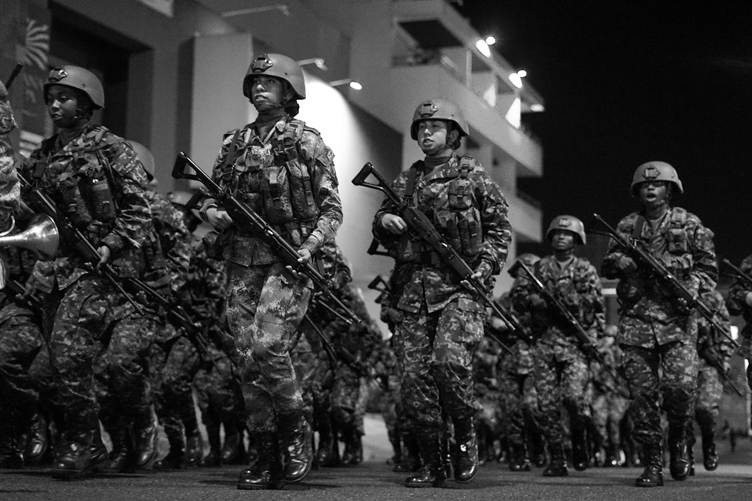
Pexel Image by Alexa Bonilla
Natural Justice and unfair inquiry:
Rules of natural justice have been recognised and developed as principles of administrative law. Natural justice has many facets. All its facets ensure justice and fairness. The two initial principles are: no one shall be a judge in his own cause, and no decision shall be given against a party without providing him a reasonable hearing. The third rule is that the procedure must be conducted in good faith, without bias and arbitrariness.
In Ram Lakhan Sharma has mentioned the multiple facets of the third rule. First, the adjudicator must be impartial, free from bias and not be the prosecutor. Second, the complainant and witness cannot be an adjudicator. Third, the Adjudicator does not apply his personal knowledge of the facts of the case while inquiring into charges. Fourth, the Adjudicator does not decide on the dictates of his Superiors or others. Lastly, the Adjudicator decides the issue with reference to material on record, not from reference to extraneous material or extraneous consideration. Thus, if any of these fundamental rules is breached, the inquiry will be vitiated and unfair.
Unfair Inquiry and absence of Presenting Officer:
Consequently, the Inquiry Officer, as a Judge, cannot act as a Presenting Officer or a prosecutor. This does not mean that the Disciplinary Authority must appoint a Presenting Officer in every inquiry. However, if the Inquiry Officer puts questions to the witnesses to elicit the facts, he should thereafter permit the delinquent employee to cross-examine such witnesses on those clarifications.
If the Inquiry Officer, while conducting a regular examination-in-chief, leads the prosecution witnesses through the prosecution case, puts leading questions, cross-examines the defence witnesses or puts suggestive questions to establish the prosecution case, the inquiry will be considered as vitiated.
Thus, the absence of the Presenting Officer by itself does not vitiate the inquiry, but the manner in which the evidence is let in and recorded in the inquiry does. This was held in Ram Lakhan Sharma.
Conclusion:
CRPF personnel can challenge an unfair enquiry by way of appeal and revision under the Central Reserve Police Force Rules, 1955. Further, such an inquiry can be challenged under Article 226 before the High Court and then through a Special Leave Petition. The Court in these challenges examines whether the departmental inquiries ensure principles of natural justice. An inquiry does not become unfair if a certain facet of natural justice is expressly excluded from the statutory scheme.
Written by:
Sonali Ray.
