

Call Detail Record (CDR) consists of the metadata of a call made by an individual. CDR is neither a call recording nor phone tapping. It is classified as metadata (data about data) because it contains information about the call, which itself is content. It is a digital footprint of a call which only provides relevant details of the call.
What does a Call Detail Record contain:
Call Detail Record does not include audio, message body or WhatsApp details like WhatsApp calls or messages. Then what does it contain? The CDR includes the following details:
– mobile number of each call,
– outgoing calls,
– incoming calls
– missed calls made to the number,
– missed calls made from this number,
– time and duration of each call,
– network or say the tower providing the network while calling.
This means CDR tells which number was called, how many times, how much time was spent on each call and the approximate location from where the calls were made. This is significant information for law enforcement and adjudication.
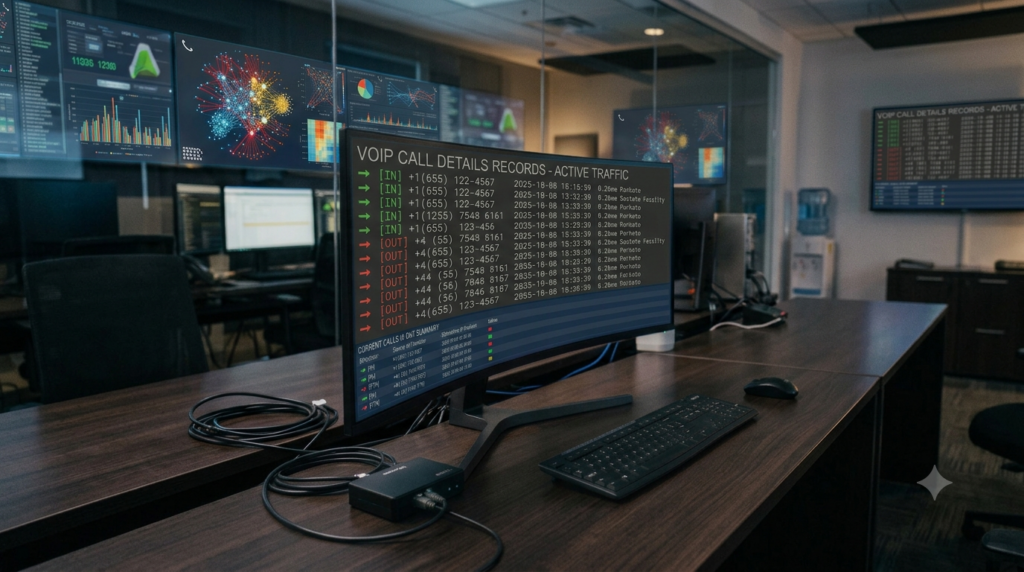
Gemini generated Image
Indian Legal Framework Governing CDRs:
The statues governing the administration of CDRs and the procedure of procurement of the Call Detail Record are as follows.
– Bharatiya Sakshya Adhiniyam, 2023 (BSA): Provides the procedural requirement for the admissibility of CDRs in Court proceedings as electronic evidence under Sections 61-63 of the Act.
– The Telecommunications Act, 2023: The government has partially enforced the Act and will replace the Indian Telegraph Act, 1885 in future. Section 44 is one of the enforced sections which obligates telecommunication companies to provide details related to telecommunication services to the Government.
– The Information Technology Act, 2000, Indian Telegraph Act, 1885, and the Digital Personal Data Protection Act, 2023 empower the government to regulate telecommunication data.
– Notification issued by the Department of Telecommunications: This notification is important as it directs the telecom to preserve CDR data for at least 2 years, mandatorily. No company can remove any person’s details for 2 years. The telecom has obligation to keep its users’ data available to provide.
– Unified License (UL) Agreement: It is a standard License Agreement format for Telecommunication Networks and telecommunication services. It expressly mentions the details CDR should include and the obligation of the licensee to provide Call Data records at specified periods.
– Judicial directives: In 2020, the Supreme Court, comprising bench Justices RF Nariman, S. Ravindra Bhat and V. Ramasubramaniam, in Arjun Panditrao Khotkar vs Kailash Kushanrao Gorantyal (AIR/2020/SC/4908) issued directions to cellular companies and internet service providers to maintain CDRs for the concerned period in a segregated and secure manner if a particular CDR is seized during investigation in the said period. To secure CDRs in further proceedings.
Who can access it?
Call detail records of telecommunication companies are not public data and cannot be shared with the public. However, the Government and Court can demand CDRs for criminal and civil proceedings. Section 44 of the Telecommunications Act, 2023, brings telecommunication companies under obligation to provide information related to telecommunication services to a government-authorised officer. The Court, under Section 94 of BNSS and under Section 30 of CPC, has the power to order production of CDRs. However, Section 94 of BNSS empowers the authorised officer also to access CDRs.
Evidentiary Value of CDRs in Court:
The Supreme Court in Pooranmal V. The State of Rajasthan & Anr. (SLP/CRL/1977/2026) mentioned that a certificate under Section 63 of BSA is mandatory for the admissibility of Call Detail Records as evidence. In Sachin Arora V. Manju Arora (Civil Appeal/400/2024), the Supreme Court upheld the order permitting the wife to procure CDRs for adultery evidence. The Supreme Court of India recognises the admissibility of CDRs as secondary evidence. CDR are considered corroborative evidence, not the sole basis of conviction.
Conclusion: Can CDRs Alone Prove a Case?
India’s communication system was significantly revolutionised during the mid-to-late 2000’s when India saw a phone boom. This has resulted in immense telecommunication data, filled with significant records of individuals. One such record is the Call Detail Records (CDRs). This has facilitated law enforcement and legal proceedings. However, the significance depends on their authenticity and what evidence they corroborate. It is not considered conclusive proof with respect to an offence.
Written By:
Sonali Ray
