

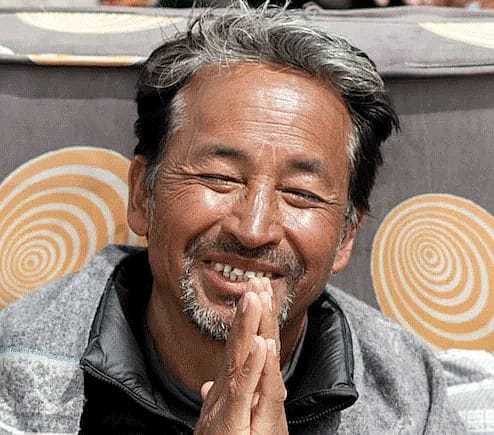
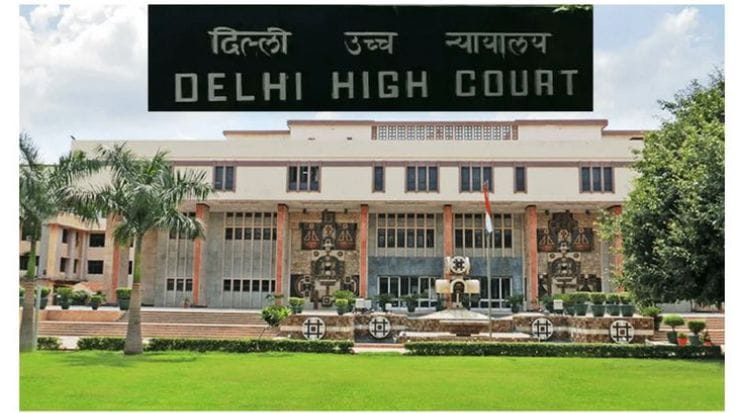
Sonam Wangchuk has been on a hunger strike at Jantar Mantar since June 28, and his health has been getting worse by the day. This week, the matter reached the Delhi High Court through a PIL filed by advocate Rakesh Kumar Saini, someone with no personal connection to Wangchuk. The petition itself illustrates an important feature of PIL jurisdiction: any concerned citizen can approach the Court in matters involving a larger public interest, not just someone directly affected by it.
Why the Petition Reached the Court
Saini’s plea asks the Centre and the Delhi Government to give Wangchuk urgent medical treatment, and if needed, shift him to a government hospital where he can be given nutrients, proteins, vitamins, and a liquid diet under medical supervision. According to the petition, his condition has deteriorated rapidly, and if he passes away, it would be a matter of great shame for the country and the world.
The petition brings two constitutional principles into direct tension. A peaceful hunger strike is a constitutionally protected form of protest, and courts have generally been reluctant to interfere with a hunger strike directly. But the petition argues that once a citizen’s life is at serious risk, the State cannot just stand by and watch, even if the person is protesting on their own terms. What makes this petition unusual is that it isn’t asking the Court to stop the protest, only to make sure it doesn’t turn fatal.
Who Is Sonam Wangchuk, and Why Is He on a Hunger Strike
Wangchuk is an engineer and climate activist from Ladakh, known for founding SECMOL in 1988 and for the Ice Stupa project, which uses artificial glaciers to store winter water for farmers. This hunger strike, though, isn’t connected to his earlier Ladakh campaigns.
He is fasting in solidarity with the Cockroach Janta Party, a youth-led movement founded by Abhijeet Dipke that has gained a large following on Instagram in just a few months. The demand is the resignation of Union Education Minister Dharmendra Pradhan, following alleged irregularities in the NEET exam, including a paper leak that affected lakhs of students. As of this week, Wangchuk has reportedly lost over 8 kilograms since starting the hunger strike and is experiencing low blood sugar, dizziness, and muscle weakness.
The Court’s Response So Far
A Division Bench of Chief Justice Devendra Kumar Upadhyaya and Justice Tejas Karia treated the plea as urgent. Notice has gone out to the Additional Solicitor General, the Union Government, and the Delhi Government, and both have been asked to clarify their stand. The Bench has also directed daily medical monitoring of Wangchuk during the hunger strike, and the matter is listed for further hearing.
None of this amounts to the Court stopping the hunger strike itself. What it has done, at least for now, is try to keep Wangchuk medically safe while the larger questions play out.
Article 21 and the Balancing Act
The legal question underneath all of this is Article 21, the right to life. Judicial decisions have consistently interpreted Article 21 as protecting not only life itself but also the right to live with dignity, which includes access to necessary medical care. So when a citizen’s health is deteriorating during a hunger strike, courts have to weigh that right against another one equally protected, the right to protest peacefully.
Neither right automatically wins. What usually happens, and what seems to be happening here, is that the Court tries to preserve both. It hasn’t ordered Wangchuk to end his hunger strike. It has ordered that he be watched over medically while he continues it. For a closer look at how courts use this kind of jurisdiction, see Constitutional Writs in India: Know Your Remedies.
Conclusion
The bigger question this case raises goes beyond Wangchuk’s own health. It’s about how far a court can go to protect a protester’s life without undermining the protest itself. The Court’s eventual decision could become an important reference point for future cases involving hunger strikes, especially where the State’s duty to protect life intersects with an individual’s right to protest.
Written By Khushi Mittal
