

Indian legal research remains highly challenging for citizens, students, and professionals alike. Despite rapid digital advancements, finding a clear, updated statute requires navigating multiple government portals, downloading extensive PDFs, and manually tracking amendments. This framework continues to reflect practices from the paper era rather than the digital age.
Publishing laws is a fundamental pillar of the rule of law, not just an administrative task. For proper compliance, citizens must have access to clear, certain, and transparent legal texts, making modern publication methods vital to governance.
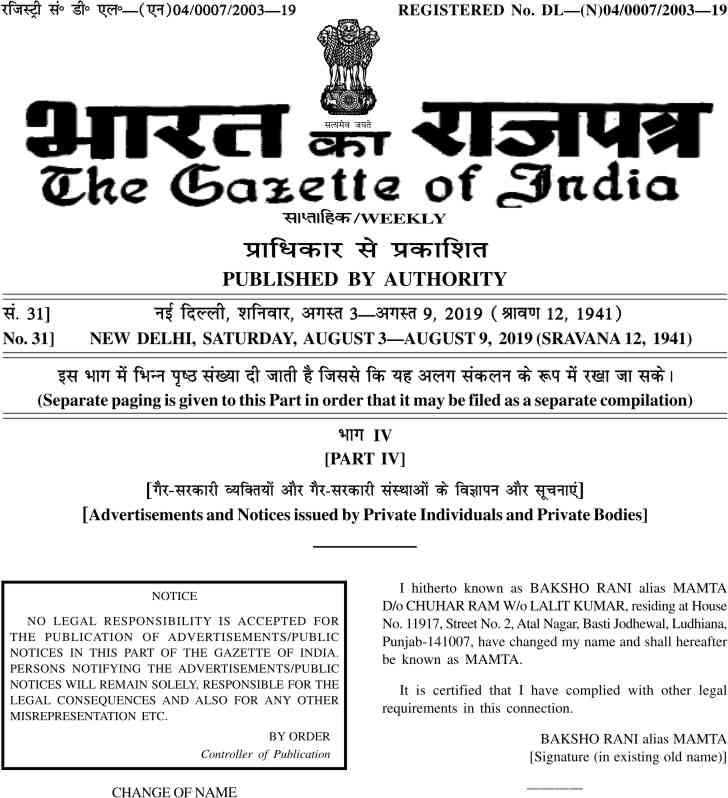
India follows a well-established legal publication framework centred on the Official Gazette. After Parliament enacts a law and the President grants assent, the Act is published in the Gazette of India. Similarly, rules, regulations, notifications, and subordinate legislation issued by ministries and statutory authorities are published through Gazette notifications. Extraordinary Gazettes are used for urgent or time-sensitive legal instruments, while Weekly Gazettes compile routine publications. The Gazette remains the official legal record of government actions. Since 2015, the Government has largely shifted from printed gazettes to the e-Gazette, recognising electronic publication under the Information Technology Act, 2000. Section 8 of the Act provides that where a law requires publication in the Official Gazette, publication in the Electronic Gazette satisfies that legal requirement. Alongside the e-Gazette, the Government operates the India Code portal, a digital repository containing Central Acts, subordinate legislation, and updated statutory texts. Users can search legislation by title, year, Act number, or keywords, making it an important step towards digital access to law.
Why the Existing System Falls Short
Despite these important initiatives, India’s legal publishing framework continues to face significant practical challenges.
The first issue is its heavy reliance on PDF documents. While PDFs preserve the appearance of official documents, they are designed primarily for reading or printing rather than intelligent digital use. Lawyers and researchers often have to manually search through hundreds of pages, making legal research slower and less efficient. Another challenge is the fragmentation of legal information. Acts may be available on the India Code portal, while recent notifications appear separately on the e-Gazette. Ministries also publish circulars and regulations on their own websites. As a result, users frequently move across multiple platforms to obtain a complete legal picture. Keeping track of amendments is equally difficult. Many laws have been amended numerous times over several decades.
The absence of machine-readable legislation presents another major limitation. Most Indian legal documents are published as static files rather than structured digital data. Computers can display PDFs, but they cannot easily interpret legal provisions, relationships between amendments, or references across statutes. This limits the development of advanced legal search tools, automated compliance software, AI-powered legal research, and sophisticated legal analytics. Accessibility also remains an important concern. Ordinary citizens often struggle with complex legal language, inconsistent document formatting, and limited search functionality. These shortcomings affect more than legal professionals. Businesses face increased compliance costs, startups spend additional resources tracking regulatory changes, researchers struggle with fragmented information, and citizens find it harder to understand laws that directly affect their daily lives. In an economy driven by digital innovation, a legal publishing system built primarily around static PDF documents no longer meets the expectations of modern governance.
What India Can Learn from the Rest of the World
Several countries have moved beyond simply uploading legal documents as PDFs and now treat legislation as structured digital data. The United Kingdom’s legislation.gov.uk portal provides consolidated versions of Acts, tracks amendments, and allows users to navigate legislation through hyperlinks and advanced search tools. Similarly, the European Union’s EUR-Lex platform offers multilingual access to treaties, regulations, directives, case law, and legislative history. Users can trace amendments, related documents, and legal status from a single interface. Countries such as Australia, New Zealand, Canada, Kenya, and South Africa have also invested in searchable legislation portals that improve public access to laws through structured digital publishing.
The Promise of Machine-Readable Laws
A significant innovation in digital legal publishing is the Akoma Ntoso standard. Derived from the Akan phrase meaning “linked hearts,” Akoma Ntoso is an international XML-based standard developed for drafting and publishing legal documents in a structured format. Unlike a conventional PDF, an Akoma Ntoso document identifies every section, subsection, amendment, schedule, definition, and reference through structured markup. This enables computers to understand the legal document rather than simply display it. The benefits are substantial. Amendments can be tracked automatically, cross-references remain accurate, multiple versions of legislation can be maintained, and legal databases become far more reliable. Structured legislation also supports artificial intelligence, legal analytics, automated compliance systems, and application programming interfaces (APIs) that allow developers to build innovative legal technology solutions. As India continues to promote Digital India and AI-driven governance, adopting internationally recognised standards such as Akoma Ntoso could significantly strengthen the country’s legal digital infrastructure.
Why Reform Matters: Changing Government Laws and Regulations
Modernising legal publishing is not merely a technological upgrade; it is closely connected to constitutional values. The rule of law requires that citizens have meaningful access to the laws governing them. Article 14 of the Constitution promotes fairness and non-arbitrariness, while Article 19(1)(a) protects the freedom to receive information as part of freedom of speech and expression. When legislation is difficult to locate, fragmented across platforms, or challenging to interpret, these constitutional ideals become harder to realise. Improved legal accessibility also advances access to justice, strengthens good governance, and enhances democratic accountability by enabling citizens to understand government decisions more easily. The economic implications are equally significant. Businesses, investors, startups, and multinational companies depend on clear and up-to-date legal information to ensure regulatory compliance. Fragmented legal databases increase compliance costs, create legal uncertainty, and may discourage investment. A modern legal publication system would reduce these burdens while fostering greater confidence in India’s regulatory environment.
The Road Ahead
India has already taken important steps through the e-Gazette and India Code portals. However, the next phase of reform should focus on creating a fully integrated digital legal ecosystem. This could include publishing legislation in machine-readable formats alongside PDFs, linking Acts with related rules and notifications, providing amendment histories and version tracking, improving search capabilities, offering open APIs for legal innovation, and adopting internationally recognised standards for legislative drafting and publication. Such reforms would not only benefit lawyers and judges but also students, researchers, entrepreneurs, journalists, civil servants, and ordinary citizens who interact with the law every day.
Conclusion
In a democracy governed by the rule of law, making legislation publicly available is only the first step. Laws should also be easy to find, easy to understand, and easy to use. India’s transition from printed Gazettes to digital platforms marked significant progress, but the future demands more than digital transformation alone. By embracing structured legal publishing, machine-readable legislation, and internationally recognised digital standards, India can build a legal information system that is transparent, efficient, and prepared for the demands of the digital age. Modernising the publication of laws is not simply a technological reform—it is an investment in better governance, stronger democracy, and greater public trust.
Written by – Monu Kumar
