

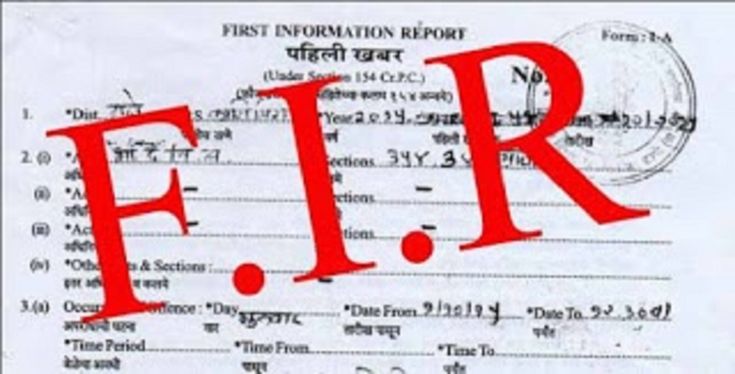
The Supreme Court had already ordered states to register an FIR the moment a missing person is reported. This week, it had to clarify something that shouldn’t have needed clarifying: the word “person” includes adults too. It made clear that registration of every missing person is mandatory.
Where This Case Came From
The matter traces back to G. Ganesh v. State of Tamil Nadu, a case that began after Ganesh’s minor daughter went missing from Chennai in 2011. Police did register an FIR and multiple agencies investigated, but the child was never found, and the case was eventually closed as undetectable. When the Madras High Court declined to interfere with that closure, Ganesh approached the Supreme Court.
What started as one father’s case turned into something much larger. The Court, troubled by the systemic issues the case exposed, expanded the proceedings suo motu to examine missing children and child trafficking across the country. It set up a committee headed by Justice (retd) Mukta Gupta in March 2026 to design a standard operating procedure for handling these cases nationally, and on May 22, 2026, it issued a set of nationwide directions built around one core requirement: every police station must register an FIR immediately on receiving information about a missing person, without waiting for a preliminary inquiry.
The Clarification: “Person” Means Everyone
This week’s hearing, before a Division Bench of Justices Ahsanuddin Amanullah and R. Mahadevan, existed only because some states had decided to read that May order narrowly. Their position was that “person” in the May 22 direction meant missing children, not adults, so FIRs for missing adults could still go through the old, slower process.
The Court didn’t just disagree, it called the interpretation a “deliberate and mala fide bogey” raised by the states concerned. Its language on the point was direct: the expression “person” means every person, irrespective of age or gender. This effectively extends the immediate-FIR requirement to every missing person case in the country, not just those involving children, and closes off a reading that several states had apparently been relying on to justify delay.

Contempt Notices and Why Ladakh Got Singled Out
The Court didn’t stop at clarifying the order. It directed that contempt notices be issued to the Chief Secretaries and Directors General of Police in states and Union Territories that had failed to comply, or failed to even file their affidavits, requiring them to appear personally and explain why they shouldn’t face contempt proceedings.
Ladakh came in for specific criticism. Unlike other states, it hadn’t filed any response at all, and the Court ordered its Chief Secretary and DGP to personally file affidavits explaining the non-compliance. The Bench also used the hearing to sort out who’s actually running the compliance exercise going forward, Additional Solicitor General Archana Pathak Dave now represents the Union of India on the committee, replacing S.D. Sanjay after he moved from that role to Advocate General for Bihar, though Sanjay continues as the committee’s Convenor.
Golden Hours and the Larger Trafficking Concern
The urgency behind all this isn’t procedural for its own sake. The May 22 order was built around the idea of “golden hours,” the narrow early window after someone goes missing when the odds of finding them safely are highest. Every hour spent on a preliminary inquiry before an FIR is filed eats directly into that window.
The scale of the underlying problem is part of why the Court has been this insistent. Around 47,000 children in India are reported to remain untraced, and the Court has repeatedly flagged concerns about organised interstate trafficking networks operating precisely because local police have historically treated missing person reports as informal “lost and found” matters rather than active criminal cases requiring the same procedural rigour that governs how an FIR gets registered in any other case. That’s the same institutional habit the Court’s earlier ruling in Lalita Kumari v. State of Uttar Pradesh (2014) tried to correct more broadly, making FIR registration mandatory rather than discretionary once information discloses a cognisable offence.
Conclusion
This clarification shouldn’t have been necessary, the May 22 order was already fairly explicit. But it reveals something about how Supreme Court directions actually travel down to individual police stations. They are sometimes narrowed, sometimes reinterpreted, sometimes simply ignored until contempt notices force the issue. With the matter related to registration of FIR for every missing person now listed for further hearing on October 5, and Chief Secretaries and DGPs across several states facing personal accountability, this is a case worth tracking for how far judicial enforcement can actually go in getting states to comply with their own compliance orders.
Written By – Khushi Mittal
