

Introduction
Transgender persons in India have historically occupied a unique yet marginalised position. Although Indian history and culture recognise diverse gender identities, transgender individuals have long faced discrimination, exclusion, and barriers to education, employment, healthcare, housing, and public services. In a constitutional democracy founded on justice, liberty, equality, and fraternity, protecting transgender rights is essential to upholding human dignity. Over the past decade, landmark judicial decisions, particularly National Legal Services Authority (NALSA) v. Union of India (2014), and the Transgender Persons (Protection of Rights) Act, 2019 have significantly strengthened the legal framework governing transgender rights in India.
Understanding Transgender Identity
A transgender person is someone whose gender identity differs from the sex assigned at birth. Gender identity reflects an individual’s internal sense of gender, while biological sex is assigned based on physical characteristics at birth. Gender expression refers to how a person presents their gender through appearance or behaviour. Indian law recognises that gender identity extends beyond the traditional male-female binary. The recognition of the “third gender” affirms every person’s right to self-identify their gender with dignity and autonomy.
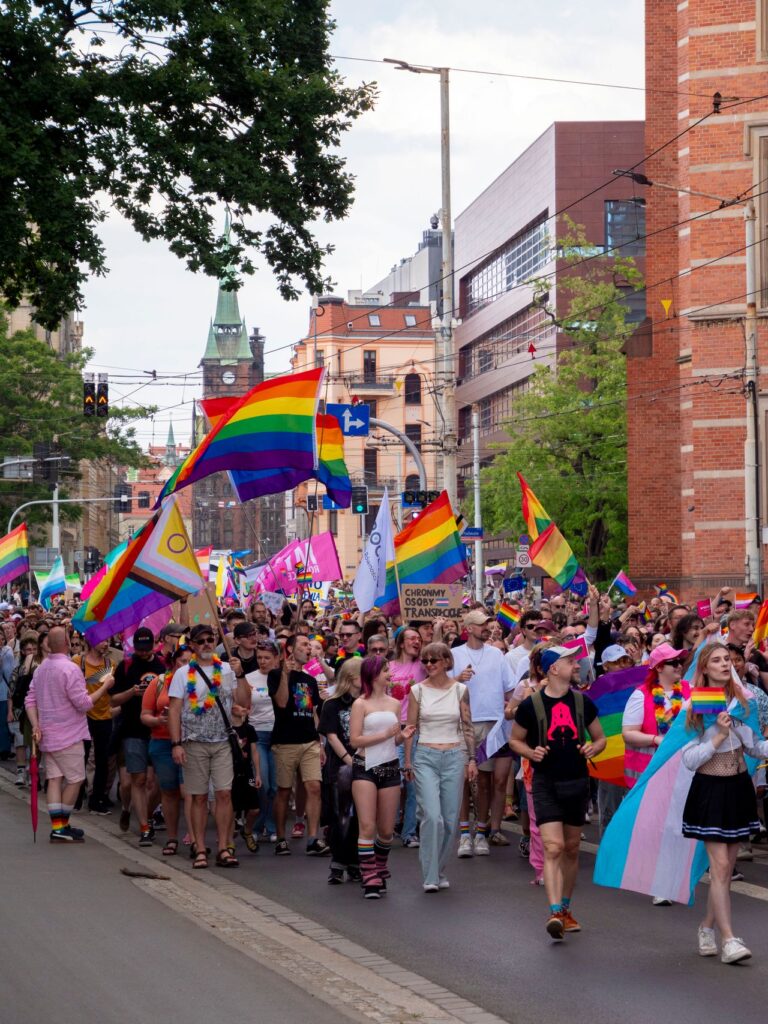
Constitutional Framework Protecting Transgender Rights
Although the Constitution does not expressly mention transgender persons, its guarantees apply equally to all individuals. Article 14 ensures equality before the law and equal protection of the laws. Articles 15 and 16 prohibit discrimination and guarantee equality of opportunity, extending protection against discrimination based on gender identity. Article 19(1)(a) safeguards the freedom to express one’s gender identity, while Article 21 protects dignity, privacy, autonomy, and personal liberty. The Supreme Court has also emphasised constitutional morality, requiring constitutional values of equality and dignity to prevail over societal prejudice.
Landmark Judgment: National Legal Services Authority (NALSA) v. Union of India (2014)
The landmark judgment in NALSA v. Union of India, (2014) 5 SCC 438, transformed transgender rights jurisprudence in India. The Supreme Court recognised transgender persons as the third gender and held that they are entitled to full protection of fundamental rights. It affirmed that every individual has the right to self-identify their gender as male, female, or third gender under Articles 14, 19(1)(a), and 21. Relying on constitutional principles and international human rights standards, including the Yogyakarta Principles, the Court directed governments to recognise transgender persons legally, extend reservations in education and public employment, improve healthcare, and implement welfare measures. The judgment shifted the legal discourse from welfare-based protection to one centred on equality, dignity, autonomy, and fundamental rights.
The Transgender Persons (Protection of Rights) Act, 2019
The Transgender Persons (Protection of Rights) Act, 2019, along with the Rules, 2020, provides statutory protection against discrimination and promotes the welfare of transgender persons. The Act prohibits discrimination in education, employment, healthcare, housing, and public services. It also obligates governments to formulate welfare measures and requires establishments to appoint a Complaint Officer for addressing grievances. The Rules introduced a procedure for obtaining a Certificate of Identity through the National Portal, while the National Council for Transgender Persons was established to advise the Government on policy and implementation. Government initiatives such as the SMILE Scheme and Garima Greh further support rehabilitation and social inclusion.
Critical Analysis of the 2019 Act
While the Act is a significant legislative milestone, it has attracted criticism regarding identity certification procedures and implementation challenges. Many scholars and activists argue that certain administrative requirements do not fully reflect the principle of self-identification recognised in NALSA. Inadequate enforcement, limited awareness, insufficient healthcare infrastructure, and employment discrimination continue to hinder the effective realization of statutory rights.
Important Judicial Developments After NALSA
Subsequent judicial decisions have strengthened constitutional protection for transgender persons. In Justice K.S. Puttaswamy v. Union of India (2017), the Supreme Court recognised privacy, identity, and personal autonomy as fundamental rights. In Navtej Singh Johar v. Union of India (2018), the Court decriminalised consensual same-sex relations and reaffirmed constitutional values of dignity, equality, and privacy. In Arun Kumar v. Inspector General of Registration (2019), the Madras High Court recognised that a transgender woman can be treated as a “bride” under the Hindu Marriage Act, further advancing legal recognition.
Recent Developments
Recent government initiatives have focused on improving implementation through digital certification systems, welfare schemes, rehabilitation programmes, and healthcare initiatives. The National Human Rights Commission has also recommended stronger legal and social protections for transgender persons.
Challenges That Continue to Exist
Despite constitutional recognition, transgender persons continue to face social stigma, violence, discrimination, educational exclusion, inadequate healthcare, housing insecurity, and employment barriers. Difficulties in updating identity documents and accessing welfare schemes also remain significant challenges, demonstrating that legal recognition alone cannot eliminate social prejudice.
Way Forward
Ensuring substantive equality requires effective implementation of existing laws, stronger anti-discrimination measures, gender-sensitive healthcare, inclusive education, employment opportunities, legal aid, and institutional sensitisation. Greater public awareness and meaningful participation of transgender communities in policymaking are equally essential to achieving genuine social inclusion.
Key Takeaways
- Articles 14, 15, 16, 19(1)(a), and 21 protect transgender persons.
- NALSA (2014) recognised the third gender and affirmed the right to self-identification.
- The Transgender Persons (Protection of Rights) Act, 2019 prohibits discrimination and provides statutory safeguards.
- Judicial decisions such as Puttaswamy, Navtej Singh Johar, and Arun Kumar have strengthened transgender rights.
- Effective implementation and social acceptance remain the primary challenges.
Conclusion
The recognition of transgender rights reflects the Constitution’s commitment to equality, dignity, and justice. Landmark judicial decisions and progressive legislation have significantly strengthened legal protections, but meaningful equality requires more than legal recognition. Achieving genuine inclusion demands effective implementation, institutional accountability, and societal acceptance. Protecting transgender rights ultimately reinforces the constitutional promise that every individual, regardless of gender identity, is entitled to live with dignity, equality, and respect.
Written by – Monu Kumar
