

Two bills moved through the Lok Sabha this week. One increases the number of judges on the Supreme Court known as the Supreme Court Judges Bill. The other amends how births and deaths are registered. Both sound routine, but the Supreme Court judges bill addresses a problem that has been building for years: the backlog of pending cases at the country’s highest court.
The Supreme Court (Number of Judges) Amendment Bill, 2026
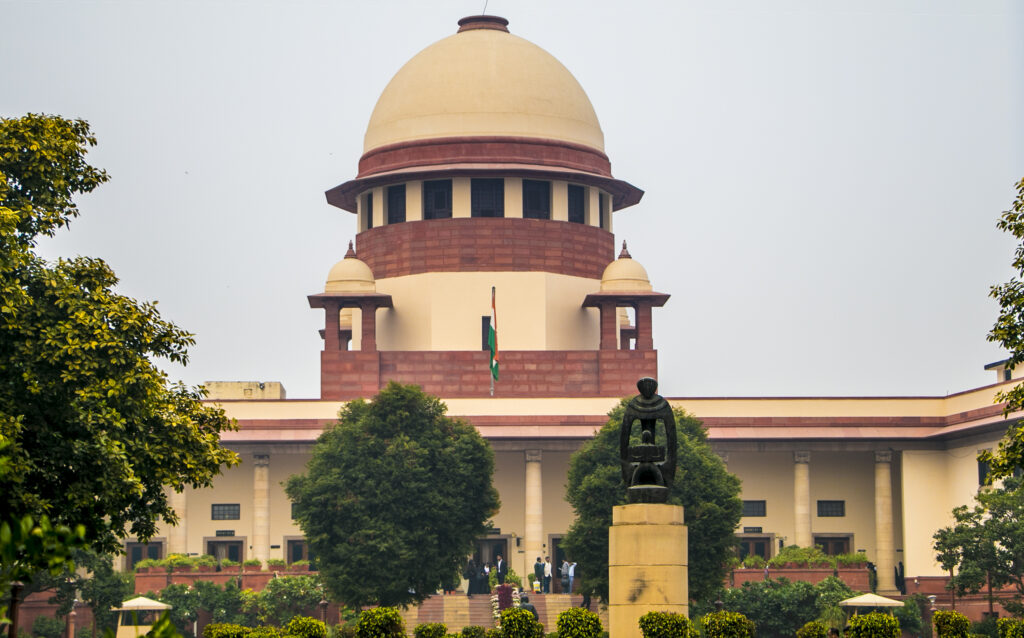
The bill raises the sanctioned strength of the Supreme Court from 33 judges to 37, excluding the Chief Justice of India. Including the CJI, the Court’s total sanctioned strength rises from 34 to 38. Union Law Minister Arjun Ram Meghwal introduced the bill in the Lok Sabha on July 20. It is meant to permanently replace an ordinance that made the same change in May.
The Supreme Court’s sanctioned strength has been revised several times since Independence: 8 judges in 1950, 13 in 1960, 17 in 1977, 25 in 1986, 30 in 2008, and 33 in 2019. Each revision followed the same reasoning, more judges to handle a growing caseload. This bill continues that pattern. It is worth noting that even at a sanctioned strength of 38, the Court’s actual working strength currently stands at 32. Filling the remaining seats is a separate process, handled by the Collegium, not something this bill itself accomplishes.
Why This Started as an Ordinance
Parliament was not in session in May. President Droupadi Murmu therefore promulgated the Supreme Court (Number of Judges) Amendment Ordinance, 2026, under Article 123 of the Constitution, which allows the President to issue ordinances with the force of law when Parliament is not sitting and immediate action is considered necessary. The Union Cabinet had cleared the underlying proposal on May 5, and the ordinance followed shortly after. Raising the sanctioned strength is only half the picture, though, since actually filling those seats still runs through the Collegium’s appointment process, the same mechanism that decides who sits on the Bench in the first place.
Ordinances are temporary by design. Under Article 123(2), an ordinance lapses six weeks after Parliament reassembles unless Parliament passes a corresponding law. This bill exists to do exactly that, convert a temporary executive measure into permanent legislation before the ordinance expires.
The Registration of Births and Deaths (Amendment) Bill, 2026
Union Home Minister Amit Shah introduced this bill, amending the original 1969 Act. It cleared the House on Friday, though not through ordinary debate. The bill was taken up after the House reassembled at noon, with BJP MP Dilip Saikia in the Chair, and was passed by voice vote amid continued Opposition sloganeering over the police crackdown on students during the July 20 parliament march. Several Opposition members entered the Well demanding Home Minister Amit Shah’s presence, and the bill passed without discussion.
Parliamentary Affairs Minister Kiren Rijiju objected to this on record, stating that the government had wanted a proper discussion on what he called an “important bill,” and adding, “It is unfortunate. Please do not repeat this in the future. People who sent you to Parliament will seek answers from you.” Saikia, presiding at the time, called it “unfortunate” that the bill had to be passed without cooperation from the Opposition. Both Houses were adjourned shortly after, till August 3.
Birth and death registration affects more people directly than its low profile suggests, since it underlies school admissions, inheritance claims, and identity verification.
Why These Bills Received Little Attention
Neither bill dominated this week’s news cycle. Parliament’s Monsoon Session has largely been occupied by Opposition protests over the NEET-UG paper leak and the police action against student protesters at Jantar Mantar on July 20. Leader of Opposition Rahul Gandhi used his floor time to press the government on the paper leak issue rather than the Supreme Court judges bill, and both Houses saw repeated disruptions through the week. A structural change to the composition of the Supreme Court passed with comparatively little scrutiny as a result.
Conclusion
The Supreme Court judges bill does not change how the Court decides cases, but it does change how many judges are available to hear them, which matters given how long pendency has remained a problem at the apex court. Between this bill, the births and deaths registration bill that passed amid sloganeering, and the ordinance that preceded both, this week showed how consequential legislative changes can move through Parliament with little debate while attention stays fixed elsewhere. Both Houses now stand adjourned till August 3.
Written By – Khushi Mittal


Samarth Bhatt
Good for awareness, insightful!
Riya Gupta
“Why these bills receive little attention” was a nice thought