

Most people’s first instinct after a car accident is panic, not procedure. But what you do in the minutes and days after a car accident can genuinely affect whether you’re protected legally, whether your insurance claim goes through, and whether you end up facing criminal liability you could have avoided. Here’s what actually needs to happen after a car accident in India, step by step.
Immediate Steps at the Scene
Stopping the vehicle isn’t optional. Under Section 134 of the Motor Vehicles Act, 1988, a driver involved in a car accident has a legal duty to stop, and driving away from the scene can turn a minor civil matter into a criminal one. If someone is injured, the same section requires the driver to take reasonable steps to get them medical help, unless doing so isn’t practical because of mob fury or a genuine safety threat.
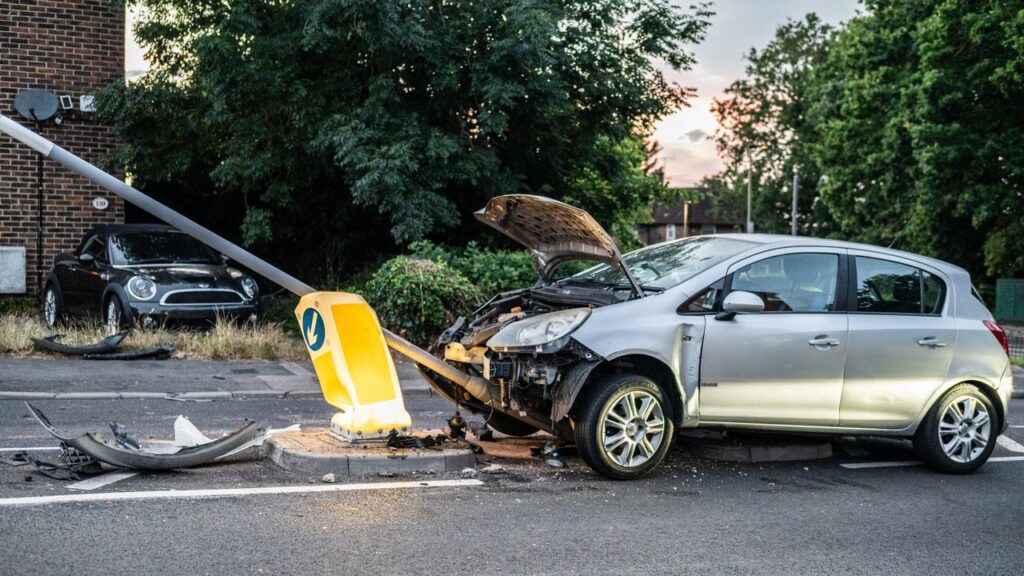
If you’re the one helping an injured stranger rather than the one involved in the crash, Section 134A protects you as a Good Samaritan. You can’t be held civilly or criminally liable for how that assistance turns out, as long as it was given in good faith and without expecting anything in return. Photographing the scene, the vehicles, the number plates, and any visible damage is worth doing early, since this evidence tends to matter far more once an insurance claim or a court case is underway than it seems to at the moment.
Reporting the Car Accident: Police and FIR
Section 134 also requires the driver to report the car accident to the nearest police station within 24 hours, even where no police officer is present at the scene. For anything beyond a minor scrape, filing an FIR rather than a simple complaint matters here, since it’s usually the document insurers and courts actually rely on later.
This is also where the criminal exposure changes depending on what happened. Rash or negligent driving on its own falls under Section 281 of the BNS. If the driving causes death, Section 106(1) treats that as causing death by a negligent act. Where the driver flees the scene after causing a fatal accident, Section 106(2) applies instead, and the punishment jumps considerably, up to ten years imprisonment, precisely because leaving an injured person behind is treated as its own separate wrong, not just an add-on to the accident itself.
Filing an Insurance Claim and Compensation
Every vehicle owner in India is legally required to carry at least third-party insurance, which is what covers injury, death, or property damage caused to someone else in a car accident. After a car accident, the insurer needs to be informed as soon as possible, along with accurate details of what happened, since giving false information can get a claim rejected outright.
For injury or death claims, the case usually goes to the Motor Accident Claims Tribunal. Compensation isn’t calculated randomly, courts largely follow the structured method laid out in National Insurance Co. Ltd. v. Pranay Sethi (2017), which factors in the victim’s age, income, and future prospects to arrive at a figure. Earlier, claims had to be filed within six months of the accident, but this limitation was removed by the 2019 amendment to the Motor Vehicles Act, so a late claim isn’t automatically barred anymore.
What the Law Requires (and What Happens If You Don’t Follow It)
Skipping any of this isn’t just risky from a compensation standpoint. Not stopping after a car accident, not helping an injured person, or not reporting to the police can attract punishment under Section 134 read with Section 187 of the Motor Vehicles Act, separate from whatever liability arises from the car accident itself. Whether the case ends up bailable or not often depends on facts like whether the driver stayed at the scene, whether alcohol was involved, and whether anyone died.
None of this is really about ticking boxes for their own sake. Each step, stopping, helping, reporting, claiming, exists because leaving any one of them out tends to make everything that follows a car accident harder to prove and slower to resolve.
Conclusion
A car accident is stressful enough without also getting the legal side wrong. Stopping at the scene, getting medical help to anyone injured, filing an FIR, and informing the insurer promptly aren’t just good practice, they’re what the law actually requires, and skipping them can turn an accident into a criminal case. Knowing these steps before you ever need them is the only way they’re actually useful when it counts.
Written By – Khushi Mittal
