

Imagine a parent being told that their child’s APAAR ID must be created before important school processes can move forward. Naturally, questions arise: Is the APAAR ID compulsory? Can a school insist on it? What happens if parents refuse consent? These questions have fueled one of India’s most significant education law debates in recent years. While the Government of India presents APAAR as a step towards digital governance under the National Education Policy (NEP) 2020, concerns regarding privacy, Aadhaar linkage, informed consent, and children’s data protection have brought the initiative under judicial scrutiny. The controversy demonstrates that digital innovation must always be balanced with constitutional rights.
What is APAAR ID?
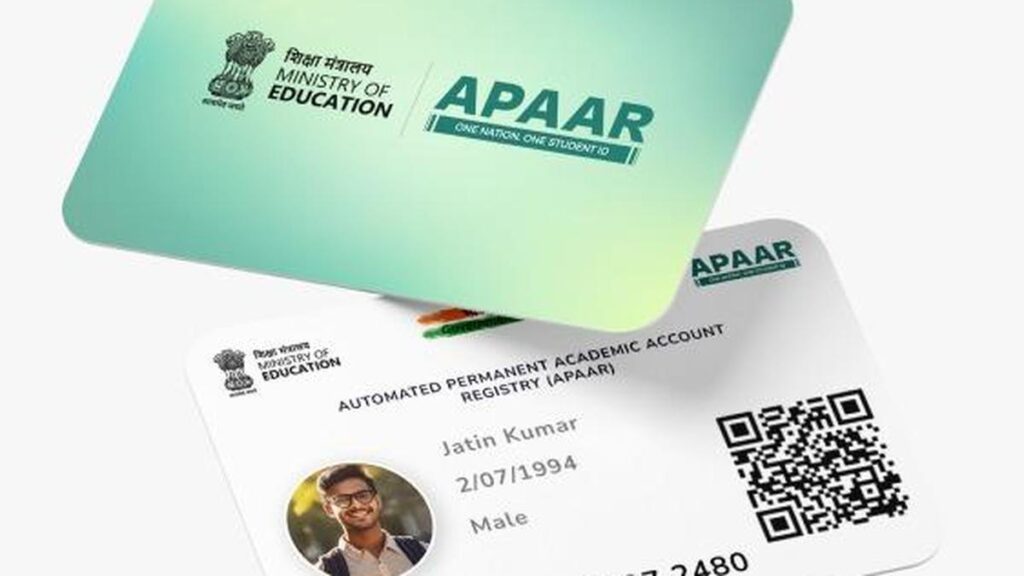
APAAR (Automated Permanent Academic Account Registry) is a unique student identification system introduced under the Ministry of Education’s “One Nation, One Student ID” initiative. It creates a lifelong academic identity by digitally storing a student’s educational records, certificates, achievements, and credits. Integrated with platforms such as DigiLocker and linked to the broader vision of the Academic Bank of Credits, APAAR aims to simplify record verification, academic mobility, and student lifecycle management from school to higher education.
Why is it in the News?
The controversy did not arise because of the concept itself but because of its implementation. Several schools reportedly encouraged—or were perceived to be compelling—parents to create APAAR IDs, leading to concerns about whether participation had become mandatory in practice. Questions were also raised about Aadhaar linkage, parental consent, and the collection of children’s personal data. In response to these concerns, authorities clarified that parental consent is an essential requirement. The issue later reached the courts, bringing privacy and data protection to the forefront of the debate.
Legal Framework
The controversy involves several important constitutional and statutory principles.
Article 21 of the Constitution protects the right to life and personal liberty, which the Supreme Court in Justice K.S. Puttaswamy v. Union of India (2017) recognised as including the Right to Privacy. Therefore, the collection and processing of students’ personal information must satisfy constitutional standards of legality, necessity, and proportionality. The Digital Personal Data Protection Act, 2023 further strengthens the protection of personal data by emphasizing lawful processing, informed consent, and safeguards for children’s data. The Aadhaar Act, 2016 also becomes relevant because APAAR verification involves Aadhaar-linked identity verification in many cases. Meanwhile, the National Education Policy, 2020 encourages technology-driven educational reforms but does not override constitutional guarantees of privacy or informed consent.
Key Legal Issues With CBSE APAAR ID
The APAAR debate raises several important legal questions.
First is informed consent. Parents should clearly understand what data is being collected, why it is collected, and how it will be used before providing consent. Second is children’s data privacy. Since minors cannot ordinarily provide legally valid consent themselves, additional safeguards become necessary when processing their personal information. Third is the principle of purpose limitation. Information collected for educational administration should not be used for unrelated purposes without lawful authority.
Finally, there is the question of whether a scheme described as voluntary can effectively become mandatory through administrative practice. This distinction is significant under constitutional and administrative law.
Recent Developments (2025–2026)
In January 2025, CBSE issued a circular implementing APAAR ID as the primary student identifier for CBSE-affiliated schools. Subsequent circulars acknowledged practical difficulties such as Aadhaar mismatches, technical issues, and lack of parental consent. Later, CBSE introduced a partial relaxation, allowing schools in specified situations to proceed without an APAAR ID while recording cases where parents refused consent.
Most significantly, in July 2026, the Supreme Court indicated that CBSE should revise its model consent form in line with safeguards emphasized by the Orissa High Court. The Court stressed that parents must have a genuine option to refuse participation and that stronger data protection measures should accompany the APAAR framework.
Arguments For and Against APAAR
Supporters argue that APAAR can simplify academic record management, reduce paperwork, facilitate credit transfers, improve educational mobility, and strengthen digital governance. Critics, however, caution that any nationwide student database must be accompanied by robust privacy safeguards, meaningful parental consent, cybersecurity protections, and clear limits on data collection and sharing. They also warn against excluding students who choose not to participate.
Conclusion
The APAAR ID controversy is not merely about technology—it is about the relationship between digital governance and constitutional rights. While creating a unified academic identity has the potential to modernize India’s education system, its success ultimately depends on public trust. That trust can only be built through transparency, genuine informed consent, robust data protection, and strict adherence to the constitutional right to privacy. As India continues its digital transformation, the challenge is not simply to collect data efficiently, but to protect it responsibly while ensuring that no student’s right to education is compromised.
Written by – Monu Kumar
